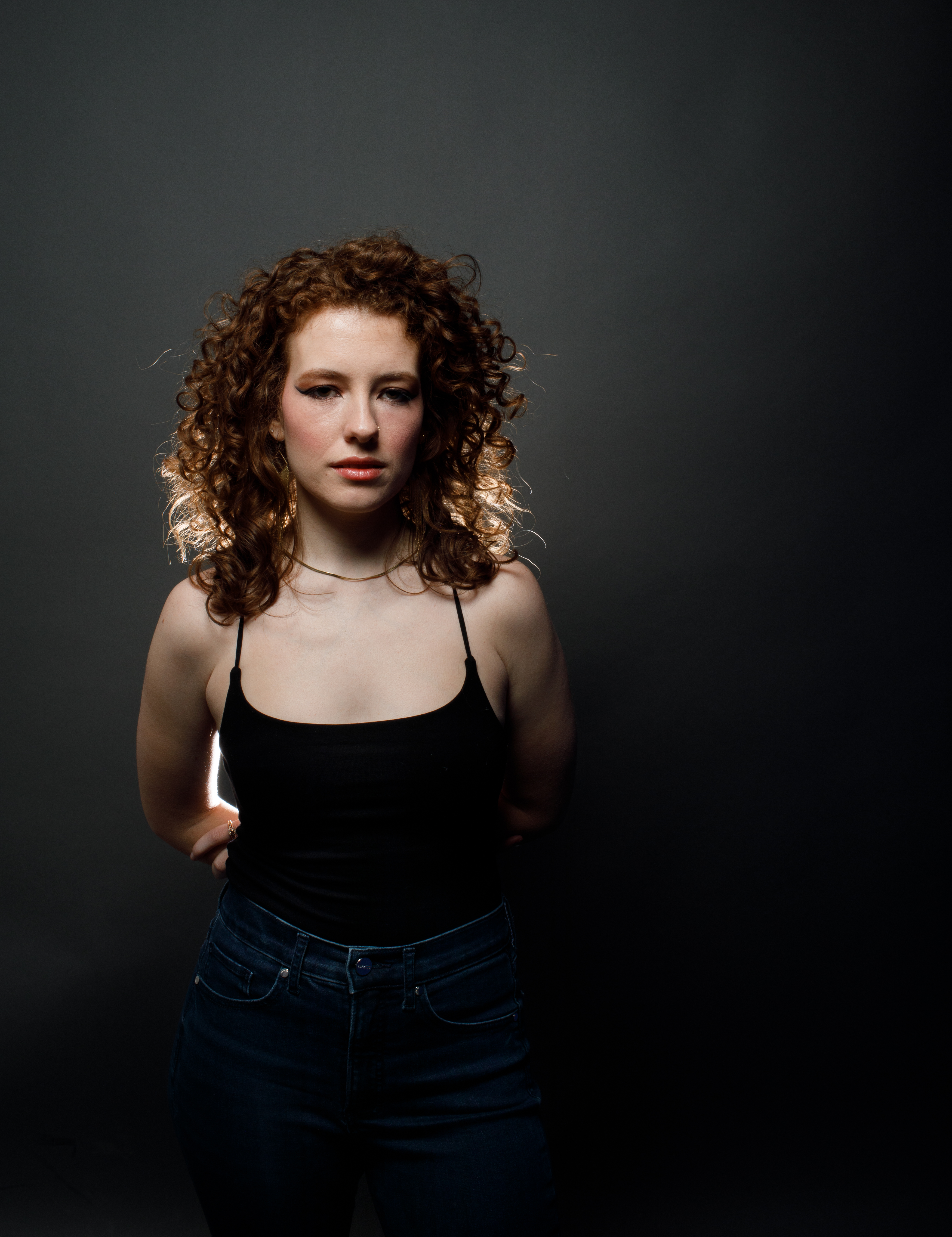
Step Tempest was born in December of 2009 in the wake of my weekly arts column, "See! Hear!", published by the Hartford Courant. The Courant had allowed me to use its platform as a home for my blog for several years after they stopped printing my "hard copy" but finally decided to close up access. So, I found blogger.com and indulged my love of music, both recorded and live, ever since. My "addiction" to creative music has been aided by numerous fine publicists and, oddly, by the pandemic of 2020. Musicians were "stuck" at home and many agreed to be interviewed for my radio show on WESU-FM here in Middletown, CT.
While my curiosity has not abated, my time to write has greatly diminished over the past several years. Several surgeries and fractures plus a busy (yet enjoyable) teaching schedule, while not altering my love of reviewing, all that and more have keot me away from this blog. I still read a lot of other writers, listen to numerous podcasts, and enjoy riding in the car with music easing the commute. It's not fair to make artists wait for a review since there are fewer and fewer outlets for positive feedback or reviews of live shows. My promises to promote artists sound thinner as the months fly by.
After I post my "Notable Releases of 2024" column later in December, Step Tempest will go on hiatus. I'll still do the occasional radio show (mostly in the summer) and might find a new home just for the various conversations I have with musicians, composers, and producers. Over the past few years, I have taught a class about music – not "Music Appreciation" but a deeper historical and sociological look at how music often reflects the culture it emanates from. The creative process is where my interest lies more so now than even when, as a young boy, I used to spend nights listening to an old tube radio that pulled in stations up and down the Easter Seaboard, up into Canada, and as far west as Chicago. All kinds of music entered my consciousness and that love of a plethora of genres and sounds has stuck with me.
Stay safe, dear reader, be strong, find your rhythm!
Richard
Enjoy a taste of "Exuberance" from composer & arranger Christopher Zuar and his Orchestra:
Lots of music yet so little time –– here begins a series of shorter reviews of the more exciting releases of the past several months.
Commissioned by SF Jazz and the Hewlett Foundation, Miguel Zenón composed "Golden City" for sextet and a three-member trombone section (two of whom double on other brass - see below). A musical history of San Francisco, the piece made it debut at SF Jazz in 2022 and was recorded a year later for the composer's Miel Music label. Zenón makes sure each member of the ensemble has a feature, often at the beginning of the track. The album opens "Sacred Land" – the leader's sweet alto tone plays the intro alone before the brass enter for support and then the whole band arrives. The story moves quickly to "Rush" (yes, the 1800s Gold Rush) to "Acts of Exclusion" (the 1862 law that curtailed the immigration of Chinese works) to "9066" (FDR's Executive Order that authorized the interment of Japanese Americans, the majority of who were already American Citizens). One can sense the urgency and poignancy in the melodies and musicianship.
Photo: Herminio Rodriguez
Not only is the writing excellent but the performances stand out. Drummer Dan Weiss stands out as a master framer of the pieces and as a melodic presence. Pianist Matt Mitchell is the other "builder" of the foundation; along with bassist Chris Tordini, the two give the "front line" great support throughout. Percussionist Daniel Diaz creates rhythmical excitement but also adds colors that are necessary to the success of the music. Guitarist Miles Okazaki is solid in support and his ensemble work plus his solos stand out. The three brass players – Diego Urcola, Alan Ferber, and Jacob Garchik – truly fill out the sound thanks to the splendid arrangements. Perhaps the best part of this project is how Zenón gives so much room to the band that when his "voice" appears, his playing delights in flights of joy, power, sweetness, all while being highly melodic.
There's so much to like on "Golden City" from how Miguel Zenón tells the sprawling story to how the musicians give so much life and heart to the music to the wonderful playing over the course of 69 minutes. Highly recommended!
Miguel Zenón - alto saxophone Matt Mitchell - piano Chris Tordini - bass Dan Weiss - drums Miles Okazaki - guitar Daniel Díaz - congas, tripandero and percussion Diego Urcola - trumpet and valve trombone Alan Ferber - trombone Jacob Garchik - tuba and trombone
Trombonist, composer, and band(s)leader Ryan Keberle is quite busy but he must have jumped at the opportunity to make this album for Marc Free and Posi-Tone Records. He's been doing a lot of smaller group work with Reverso (trio), Collectiv Do Brasil (quartet), and Catharsis (now a quintet) but it's been 14 years since his last Double Quartet album. "Bright Moments" is his first album as a leader on the label and, arguably, it's one of the 10 best Marc Free has ever released. Why? Because Keberle had the opportunity to arrange the songs, all originals, to utilize the talents of a brilliant rhythm section – pianist Art Hirahara, bassist Boris Kozlov, and drummer Rudy Royston – and have his melodies "sung" by the great "voices" of Pat Cornelius (reeds, flute), Diego Rivera (tenor sax, flute), Alex Norris (trumpet, flugelhorn), and Michael Dease (baritone sax). All but one of the songs have appeared on previous albums – the new versions give both the composer and the audience a different perspective.
You can hear the influence of Keberle's immersion into Brazilian music on "Edu" – the music rolls forward on the power of the drums and the deep baritone sounds. The expansive melody is shared by the reeds and brass before Norris steps out for a handsome solo. "Despite the Dream", which the trombonist composed for Catharsis's 2020 "The Hope I Hold". This powerful ballad opens up in the middle as the tempo speeds up and short solos lines are created by Cornelius (alto sax) and Norris. Later, Cornelius and Dease (whose bari work is mighty impressive) take longer solos. "Sisters of Mine" was originally recorded by Reverso. Here, the tribute to the composer's two sibs serves as a vehicle for a lovely tenor solo from Rivera. To get there, the melody is presented by Cornelius (soprano sax), Norris, and Keberle (such a lovely tone). Melody sharing abounds on this album. The bass clarinet (Cornelius), trumpet, and flutes (Rivera and Cornelius) each introduce the melody on "All Ears", which is repeated twice without a solo. Yet, the piece is so satisfying because of how all the voices are utilized to make the piece so successful.
Photo" Anna Yatskevich
"Bright Moments" closes with the oldest piece in the collection. "When I'm Away" is from 2006 and was on the first of Keberle's two Double Quartet albums. The arrangement is similar but the 2024 "voices" includes reeds whereas the older take has a four-piece brass section. Either way, it's a beautiful piece of music and features an excellent from the leader, brilliant backing from the great rhythm section.
If you're a Ryan Keberle fan, this is yet another gem in his growing discography (plus there's a new Catharsis album coming in October). Great music played by a great band – "Bright Moments" indeed!
Ryan Keberle - trombone Alex Norris - trumpet; flugelhorn Michael Dease - baritone saxophone Patrick Cornelius - alto saxophone, soprano saxophone, bass clarinet, and alto flute Diego Rivera - tenor saxophone; flute Art Hirahara - piano Boris Kozlov - bass Rudy Royston - drums
In a perfect musical world, pianist, composer, bandleader, and label owner Orrin Evans would be a bonafide superstar. Think about it – the music he creates is such a delightful fusion of Black Music old and young. He can "out", he can play "in", he's a great "comper" and has no fear of mixing soul/ r'n'b into different settings. Over the course of 20 albums on labels such as CrissCross, Palmetto, Posi-Tone, Smoke Sessions, and his own Imani Records, he's led groups of all sizes, from trios to 14-member big bands and, bless his soul, has yet to make a boring record.
"Walk a Mile in My Shoe" (Imani Records) is the fifth album from the Captain Black Big Band: nine members strong for this recording (plus guests bassist Anthony Tidd, trumpeter Nicholas Payton, and organist Jesse Fischer as well as seven tracks with vocalists), the the nine-song program ranges from "standards" to 70s "pop" tunes to Blues to soul. Evans serves as "overseer" with production credits going to "the Village" (current and former band members. Trombonist David Gibson contributed four arrangements, Mark Stasio two, and one each from Josh Lawrence, Todd Bashore, and original member John Raymond. The vocalists –– Paul Jost, Joanna Pascale, Bilal, and Lisa Fischer –– all bring unique singing styles to the mix and it's a real pleasure to hear how the arrangers create new worlds for each one.
The album opens with "Dislocation Blues"; penned by the late Chris Whitley the songs creeps in on the funky drums of Anwar Marshall and the liquid electric bass of Anthony Tidd. Paul Jost digs into the lyrics shadowed by Evans and organist Fischer. Jost also shines on Todd Bashore's brilliant, smoky, and elegant arrangement of David Gates's "If" (first recorded by Bread in 1971). Caleb Wheeler Curtis plays a wonderful soprano saxophone solo yet it's the arrangement of the sections that truly stand out. The ensemble sounds so big yet the arrangement as well as the excellent sound mix keeps the vocalist front and center.
Photo: Rob Davidson
Other highlights include vocalist Lisa Fischer sounding great on her two appearances. She absolutely "owns" "Blues In The Night" (from the prolific pens of Harold Arlen and Johnny Mercer) yet the brilliant arrangement by Mark Stasio also stands out. The piano solo scorches the speakers. Listen below to Stevie Wonder's "Overjoyed". Here, Ms. Fischer sounds so tender, accompanied in the opening moments by only trumpeter Nicholas Payton and Evans. Josh Lawrence's fine arrangement has echoes of Burt Bacharach especially when accompanying the vocal after the solos.
Photo: Lisa Hagen Glynn
The one purely instrumental piece is a smashing brass and reeds only arrangement (David Gibson) of Jerome Kern's "Smoke Gets In Your Eyes". Short and ever-so-sweet!!
Bilal's two appearances include a funky original "All That I Am" (with Nicholas Payton grooving with the band) and a heartfelt take on Marvin Gaye's pleading "Save The Children". The lyrics are still quite prescient and the vocalist makes sure the listener understands the plight of inner-city youth. The instrumentalists capture the feel of the early-to-mid 70s groove that the late Mr. Gaye on his albums.
The album title "Walk a Mile In My Shoe" refers to the malformation of Orrin Evans's left foot, a condition that kept him from playing sports with his friend. The cover shows the special shoes he had to wear. Don't feel bad for him. Mr. Evans used his experiences, his surgeries, the pain, and, as he done often over his career, created a positive message of perseverance and moving forward. This particular reminds of the programs the late trumpeter Lester Bowie created for his Brass Fantasy ensemble, the blend of old and new, jazz and pop, the delicious funky backbeat, the swirling arrangements. It's like a variety show and I mean that in the nicest possible way. Fun for the whole family.
Here's the CBBB with Ms. Lisa Fischer on Stevie Wonder's "Overjoyed:":
Personnel:
Sean Jones, Josh Lawrence – trumpets Todd Bashore – alto saxophone, flute Caleb Wheeler Curtis – tenor/soprano saxophones David Gibson, Reggie Watkins – trombones Vicente Archer, Madison Rast – double bass Anthony Tidd (“Dislocation Blues”) – electric bass Anwar Marshall, Mark Whitfield II – drums Orrin Evans – piano
Guest soloists: Nicholas Payton (trumpet), Jesse Fischer (organ)
Guest vocalists:
Lisa Fischer ("Blues In The Night" and "Overjoyed")
Paul Jost ("Dislocation Blues" and "If")
Bilal ("All That I Am" and "Save The Children")
Joanna Pascale ("Sunday In New York")
Photo: Jonathan Yee
Florida-native and trumpeter Jonathan Powell moved to New York City in 2001 where he found work in a number of bands but, most notably, the Afro-Colombian ensemble La Creacion. He's gone on to work with Arturo O'Farrill & His Afro-Latin Jazz Orchestra, Eddie Palmieri, Snoop Dogg, Ricky Martin, Miguel Zenón, and Pedro Giraudo (amog many others). In 2007, he started his own band, nu Sangha, and has since released two albums. He moved to Colorado Springs, CO, to become part of the U.S. Air Force Falconaires Big Band. Before he left, he went into a New York City studio to record a new album, one that reflect his two decades as a sideman in numerous ensembles.
"Mambo Jazz Party" (Circle 9 Records) is as, the title says. a "party". Just check out the personnel list; see all those percussionists, the brass and reeds, and then take a listen to the track below Now, try to sit still. I didn't think so. Powell, whose brother Jeremy plays tenor saxophone on 10 tracks and flute on one more, has the kind of sharp tone that cuts right through the band. His section work is exceptional. The trumpeter's experiences in Latin ensembles echoes throughout the program. There's the amazing rhythm section built around bassist Luques Curtis and drummers/percussionists Camilo Molina,Marcos Lopez, Marcos Torres, and Luisito Quintero. The rhythms percolate, bounce, sway, rumble, thunder, and make one want to dance around the floor. For example, "Paramahansa" bubbles in on congas, bongos, and more until the ensemble enters to state the sweet melody. The brass swirl all around the percussion on the fiery take of Joe Henderson's "Inner Urge", the piercing tones of the trumpet matched the mellower sound of Doug Beavers on trombone.
Manuel Valera joins the "party" for several tunes including the sensuous take of Herbie Hancock's "Butterfly". His electric piano and synth work dances around ad underneath Powell's "electric" trumpet solo before the keyboardist dances atop the band.
Listen below to Eddie Palmieri's "Un Dia Bonita" featuring the exciting vocals of Anthony Almonte. Notice that brilliant percussion, the hypnotic piano work of Mr. Valera, and how much fun the vocalist is having. Of course, you cannot miss the groove.
Tracks like "Frogwala" and the album opener "Juancito" will test your speakers capability to withstand the thunderous rhythm section. The latter track also features a solo from the great trombonist Jimmy Bosch, founder of La Orquestra and his Sexteto de Otro Mundo. Powell's "Totem Pole" closes the program. The opening moments bring McCoy Tyner's large ensemble to mind but solos by bassist Luques Curtis, the leader, and trombonist Doug Beavers emphasize the Latin sound as does the rollicking drum solo from Camilo Molina that closes the piece.
Need an excuse to party. Roll up the rugs, fire up the grills, chill the libations, and throw "Mambo Jazz Party" on the stereo. Jonathan Powell has created a delightful antidote to the blues and the news –– open your ears and put on your party shoes.
Jonathan Powell trumpet, flugelhorn, & EVI Andrew Gould alto saxophone Jeremy Powell tenor saxophone & flute Jimmy Bosch trombone solos ("Juancito") Doug Beavers trombone
Itai Kriss flute Louis Fouché alto saxophone solo ("Juancito") Nir Felder electric guitar ("Hope") Axel Tosca piano, fender rhodes & synth Manuel Valera fender rhodes & synth ("Butterfly" and "Yogananda") Luques Curtis bass Camilo Molina drums & timbales, shekere & clave, maracas & guiro, bongos, and bata (10) Marcos Lopez congas Marcos Torres congas Luisito Quintero bongos, guiro, campana, miscellaneous percussion Ariacne Trujillo lead vocal ("You're Everything") Anthony Almonte lead vocal ("Un Dia Bonita"), coros ("You're Everything")
Jeremy Bosch coros ("You're Everything" and "Un Dia Bonita")
There was a long time in the recorded history of Black American Music, especially Improvised Music, that records labels big and small put together recording sessions that combined leaders of various ensembles in their own "Super Session." Norman Granz did it in the 1950s with his "Jazz at The Philharmonic" series, Milestone/Prestige producer Orrin Keepnews did something similar in the 1970s and 80s with Sonny Rollins, McCoy Tyner, Bobby Hutcherson. and others. Wayne Shorter's Quartet, founded in 2000, is, perhaps, the most successful of the "leaders-full" group – pianist Danilo Perez, bassist John Pattitucci, and drummer Brian Blade are all established artists who joined the late Mr. Shorter to create a two decades of explorations and sonic adventures.
Photo: Erika Kapin
The members of Lux Quartet have a similar lineage to Mr. Shorter's group. Pianist Myra Melford seemingly exploded onto the "jazz scene" out of Chicago to New York City in the early1990s with her HatArt trio recordings and has gone to lead or co-lead numerous ensembles. Drummer Allison Miller has been leading ensembles since the early 2000s, creating music that blends story and song, rhythm and freedom; she also is a highly sought-after side person. Saxophonist Dayna Stephens has also been in the spotlight since the mid-2000s creating albums and groups that celebrate tradition as well push at the borders of said tradition. Bassist Scott Colley has a list of credits ranging from recordings and live gigs with guitarist Jim Hall, saxophonist Donny McCaslin, pianist Andrew Hill, vibraphonist Gary Burton, and so many others to eight albums as a leader. Put these four musicians together and the sky's the limit!
"Tomorrowland" (ENJA/Yellowbird) is the Lux Quartet's debut album. Ms. Melford and Ms. Miller, the co-leaders of the band, contribute three compositions apiece to the program with Mr. Stephens and Mr. Colley adding one of their own. All that aside, when you put on the album, this is most assuredly a group effort. The opening track, Ms. Melford's "Intricate Drift", comes in on a martial beat and a slinky melody line. First thing one hears is bassist Colley's counterpoint to that melody. The alto sax solo skitters atop the now-dancing rhythm section. Ms. Melford's piano solo builds off the delightful alto spot, introducing a touch of Monk and a lot of angular melody lines and chords. Ms. Miller's "Congratulations and Condolences" opens like a mid-1960s John Coltrane piece with the soprano sax melody bouncing off the high-powered rhythm section. The energy jumps up considerably for the sax solo. Ms. Melford follows with her knuckle-buster solo like a whirling dervish in the midst of a sand storm.
Image: Michael Jackson
The following track, "Deeply Us" (also a Miller composition), is a beautiful ballad on which Mr. Colley's bowed bass and the truly emotional piano solo stand out. Mr. Stephen's tenor does not really enter until half-way through but his melodic journey is gentle and heartfelt. Nothing is rushed or truncated, all the elements in their places.
Listeners who remember the great San Francisco Bay-area drummer Eddie Marshall (1938-2011, pictured left) who played with the fusion quartet The Fourth Way as well as vibraphonist Bobby Hutcherson (among many others) will enjoy Ms. Miller's "Speak Eddie". Starting out as a fast "bop" tune, the quartet immediately drops into a march beat to state the theme. Ms. Melford charges ahead into her solo firing up the rhythm section to alternate tempos, her dancing two-fisted attack raising the bar. What follows is a bass and sax conversation (sans piano and drums) with the musicians teasing, cajoling, and, all of a sudden, Ms. Miller takes Colley's place dueling with Stephens before the drummer takes over for a short, fiery, solo before everybody returns for a quick statement of the theme.
The album closes with the title track, the bassist's contribution, and it too is a powerful ballad. After a two-minute solo piano introduction, the bassist shows his masterful melodic side which leads to the tenor taking the lead over the swirling cymbals and piano-bass conversation. The most impressionistic piece on the program, the second half of the performance rises and falls on the bowed bass, skittering cymbals, and the saxophone's gentle pleading, perhaps praying. The intensity ramps up until the inevitable fall back down to silence.
The more I listen to "Tomorrowland", the more I hear a group effort. It's understandable for some to concentrate on the four excellent musicians in the Lux Quartet. One really has to listen as we were the fifth member of the group sitting alongside the rhythm section. Judging by the videos online (see one below), the band is excellent in person. Jump in – tomorrow is sounding quite good!
Guitarist Kurt Rosenwinkel really came into his own as a bandleader, composer, and guitarist in the late 1990s when he organized The Next Step Band, a quartet featuring Mark Turner (tenor saxophone), Ben Street (bass), and Jeff Ballard (drums). Sometimes, pianists Brad Mehldau or Scott Kinsey joined the core quartet. Rosenwinkel signed with Verve Records in 2000, producing a trio of albums over the next three years featuring these musicians. "The Enemies of Energy" was issued first – the album had been recorded in 1996 and, upon its release, received great critical acclaim in the United States and around the world. "Live at Smalls 1996" (Heartcore Records) shows the group at its best, navigating through six tunes, five of which exceed nine minutes, with an infectious energy that begs one to play the album loud...and often. It's a treat for the listener to get lost in the improvisations –– Turner and the leader are particularly impressive all the way through. Under headphones, one can hear the subtlety that Ballard and Street bring to the music, not just holding the pieces together but really pushing the front line.
Listen below to "Use of Light" to hear a group that listens, responds, and is involved in telling its story!
(By way of apology, read on.) Christopher Zuar, composer and arranger, released his second album as a leader, "Exuberance" (Tonal Conversations) in May of this year. At the time, I had been listening to the music for a month while recuperating from the first of two fractures. With everything piling up (including student Final Papers), the album kept getting shunted aside. Yet, I kept returning to the music, especially in the quiet morning hours where the only other sounds one hears is the songs of various birds. Now is my chance to tell you this album is one of the best of this year!
First off, who is Christopher Zuar? A native of Long Island, NY, Zuar has been composing since his youth, winning numerous awards. He did his undergraduate work at the New England Conservatory and earned his Masters of Music degree at the Manhattan school of Music. Along the way, he has studied with Jim McNeely, Maria Schneider, and Mike Holober and had his works performed by the WDR Big Band, the Danish Radio Big Band, and the Brussels Jazz Orchestra. He has arranged for artists such as Miho Hazama (a great arranger in her own right), Joel Ross, Theo Bleckmann, and more. His debut recording, "Musings", was issued in 2016 by Sunnyside Records to great critical acclaim. In his music, one can hear traces of the influences of his mentors but also of the 20th Century classical composers he listened to as well as more "popular music" artists.
The initial sessions for "Exuberance" took place in August of 2018 but due to numerous complications and the pandemic, did re-commence until three years later (August '21). The project is a partnership with animation filmmaker Annie Beal (they were married in 2022) when both had fellowships to the MacDowell Colony in New Hampshire (go to https://vimeo.com/260899301 to see them at work). By then, they had created Tonal Conversations, an outlet for their creativity. The album is filled with brilliant musical conversations throughout played by an incredible 18-member band (see "personnel" below), many of them who have worked with each other on large ensemble projects. Guests include violinist Sara Caswell who has also shown up on numerous jazz and classical albums over the past few years. Conductor Mike Holober, who had produced Zuar's 2016 album, led the band for the recording sessions.
Photo: Maria Baranova
This music is quite melodic. The horn and brass sections often push the melodies forward –– they also often set the tone and mood of the music. The opening track, "In Winter Bloom", opens with with a static piano figure before the sections set the piece in motion. Their choruses set the the stage for solos from bassist Drew Gress and tenor saxophonist Jason Rigby. Listen below to "Communion", how the flutes and piccolos riuse aboe the horns to set the stage for Ms. Caswell's playing of the theme. Pianist Glenn Zaleski plays a second theme before the brass and flutes carry it forward, again opening the path for the piano solo. The violin solo that follows kicks the piece into the stratosphere as Gress and drummer Mark Ferber create a powerful thunderstorm.
Photo: Maria Baranova
One of the best aspects of this seven-song, 59-minute, program is that each song stands out on its own and as part of the overarching theme. "Simple Machines" blends the sound of Appalachian bluegrass with big band swing with Ben Kono creating a powerful tenor sax solo over a funky beat followed several minutes by a short fiddle hoedown (shades of Aaron Copland). That leads into a delightful mandolin spot from guest Joe Brent followed by a rollicking solo from Ms. Caswell. The episodic "Before Dawn" opens with a thunderstorm but, as the "day" breaks, the music becomes more tranquil. Guitarist Pete McCann creates a long, flowing, solo over the rhythm section until the horns and brass enter which then kicks his sound and attack into overdrive with drummer Ferber with him all the way through. One hears the storm fading as ther song closes.
Vocalist Emma Frank joins the Orchestra for the final track, the song that gives the album its title. The delightful love songs, lyrics by Ms. Beal, talks about how we all need to be nice, even as storms swirl around us as well as inside us. Ms. Frank flows along with the melody with the brass in unison behind her. The ensemble kicks into a higher gear for a hard-hitting alto sax solo courtesy of Dave Pietro followed by a fascinating trumpet spot from Scott Wendholt that actually starts on the powerful side, stays there for several minutes then slows down to reintroduce Ms. Frank to sing "Will you dance with me?/ Will you guide through the crowded floor?/ I will dance with you". The piece rides out on a wordless vocal over the whispering ensemble, a gentle finish to a splendid piece of music and entire album.
Exuberance is defined as "thequality of being full of energy, excitement, and cheerfulness". "Exuberance", the album from the Christopher Zuar Orchestra, is all that and much more, downright joyous. Christopher Zuar is becoming one of the finest composers and arrangers of this time and the future bodes ever-so-well!
Every once in a while, you receive a recording and you say "how have I missed this artist? – surely this is not her first album". As far as I can tell, April Varner, a native of Toledo, Ohio, is a true newcomer. Yes, she won the 2023 International Ella Fitzgerald Jazz Vocal Competition and before that had self-released a 4-song EP, "Hummingbird", in 2022 but, for the most, she's been flying under the "critical" radar. Her bio reads that it wasn't until she attended Indiana University that began Ms. Varner made her transition to jazz. Soon, she was the head of the IU vocal jazz ensemble and in her senior year, became the vocalist in the Du Vido Septet, the IU Brazilian Jazz ensemble. After graduation, Ms. Varner moved to New York City where in 2022, she earned her Master's Degree in Vocal Jazz Voice Performance under the tutelage of Theo Bleckmann. Since then, she has studied with Tierney Sutton, Kurt Elling, Russell Malone, and Sachal Vasandani (among others) as well as performing in clubs and concert venues around the United States and in venues in France.
"April by April Varner" (Cellar Music) is her first album. Produced by Ulysses Owens II, not only does the 11-song program cover a lot of musical territory but also does so with each song having "April" in its title. The really smart idea works because of her choice of material. Yes, there are standards, such as "I'll Remember April" and "April In Paris" but there are also several originals. Her choice of covers range from Paul Simon & Art Garfunkel's "April Come She Will" to Prince's "Sometimes It Snows In April" to Glen D. Hardin's "April Again" (first recorded by Dean Martin!) to her original lyrics to Pat Metheny's "Joy Of April". Ms. Varner joins voices with Theo Bleckmann on an emotionally rich reading of Frank Ocean's "Dear April". Not only do the the two voices interact but Bleckmann, who is the co-producer on the track, overdubs numerous voic es that serve as a chorus, as counterpoint, and as whispers in the distance.
As important as the material is, the excellent musicians who support her throughout the majority of the songs are just as integral to the album's success. Pianist Caelan Cardello, bassist Reuben Rogers, and drummer Miguel Russell are not just her "backup band" but also key contributors to the success of the performances. They lay down a "wicked" Latin rhythm on "I'll Remember April" which also includes Dayna Stephens (tenor saxophone) and Bennie Benack III (trumpet). In the middle of the song, Ms. Varner and Mr. Benack III step out for a vocal exchange that's a rapid-fire scat interaction. Listen below to Mr. Metheny's "Joy of April" which features her trio plus one of her mentors, Russell Malone on guitar. Note how high and clear she sings through her lyrics – always clearly, never strident – and her "solo" is the middle is a joy, as is the fine tenor solo from Mr. Stephens. Ms. Varner caresses Prince's lyrics on the sad elegy "Sometimes It Snows In April": the rhythm section is right there with her. Russell's gentle cymbal work, Rogers' melodic bass work, and Cardello doing double on acoustic and electric guitar. Their sterling accompaniment gives Ms. Varner the right support so her soulful, emotional, vocal stands out.
The album closes like it began, with a fine original from the leader. "Who Let April Back In My Dreams" rains down on the listener like a gentle Spring shower. The voice draws you into the story, into the dream of unrequited love, and the music helps you settle. It's a smart close to a splendid debut.
"April by April Varner" should introduce the fine young singer and composer to a wider audience. Don't be put off by the 11 "April" songs: embrace the fact that each song is a universe of delights in itself. Also note that April Varner has a lovely, lively, voice that never sounds like anyone but herself. You might hear some Ella, perhaps Sarah Vaughan, and, on the Frank Ocean tune, hints of Sachal Vasandani in her delivery, but it all gets mixed in seamlessly. This is quite a delightful album and one hopes for many more over the decades!
Nothing I love more than being surprised by an artist I am not familiar with. The latest example is below.
When I received the new album by Milton Suggs, "Pure Intention", his 13-song program of duets with pianist Michael King, I ignored the press release and just listened to the album. In fact, I listened twice in a row. Who is this guy? Why have I never heard him before? Is this his debut? Then, I went to his website, read the PR, and realized this is his fifth album but first since 2016. Suggs has a deeply emotional delivery which feels soaked in gospel, blues, and jazz with touches of Nat "King" Cole, Sam Cooke (minus the melisma), and others. His 2010 debut album. "Just Like Me" was a duo album with one of his mentors, Chicago stalwart pianist Willie Pickens. The program features 10 songs from the Duke Ellington-Billy Strayhorn library. It certainly is an impressive debut – move forward 14 years and you can hear how his voice and style have matured. The influences are not as obvious on the new album, the songs, many of them jazz instrumentals that Suggs supplied the lyrics for, are well-crafted, and Michael King is a perfect accompanist!
The 13-song program opens with "Sing A Song of Song", a piece that celebrates the joy of singing. The lyrics also celebrate positivity, freedom, and more. After King's short solo, Suggs really digs into the vocal. "Sunrise in Malibu (A Pleasant Surprise)" is a sweet up-tempo love song in which Suggs sings about all the surprises (at least, the good ones) that make up one's life with the person. That's also an important aspect of this program – the singer's messages from song to song are quite positive. Even the wonderful cover of the O'Jays "Cry Together" (composed by Kenny Gamble and Leon Huff) where the story talk about a couple going through tough times who end up not only crying together but making love and pledging to continue. Later in the program, "To Wisdom The Prize" speaks to people to take their time time, assess their lives, learn from their elders, and grow. King's piano solo on this tune is one of his high points, powerful yet emotional. His rhapsodic solo on "Pretty Eyes (Those Eyes)" shows the influence of both McCoy Tyner and George Gershwin.
The album closes with "Golden Time of the Day", first recorded by Frankie Beverley & Maze in 1978. The duo really caress the melody and the swaying rhythms with a fadeout that one wishes went on even longer. Throughout the album, Suggs and King (who also studied with Willie Pickens) are in sync and never upstage each other. The intimacy of the music is what is so attractive about "Pure Intention". Milton Suggs and Michael King invite the listener in to their living room, asks you to sit back in a comfortable chair, might even pour you a cool beverage, and then pour out their souls for the next hour. If you love vocal music created by someone who is concerned more with telling a story than impressing you with his/her technical dexterity, this album will give you great pleasure.

 Posts
Posts